Secondary school & Gymnasium
Secondary school & Gymnasium SOT
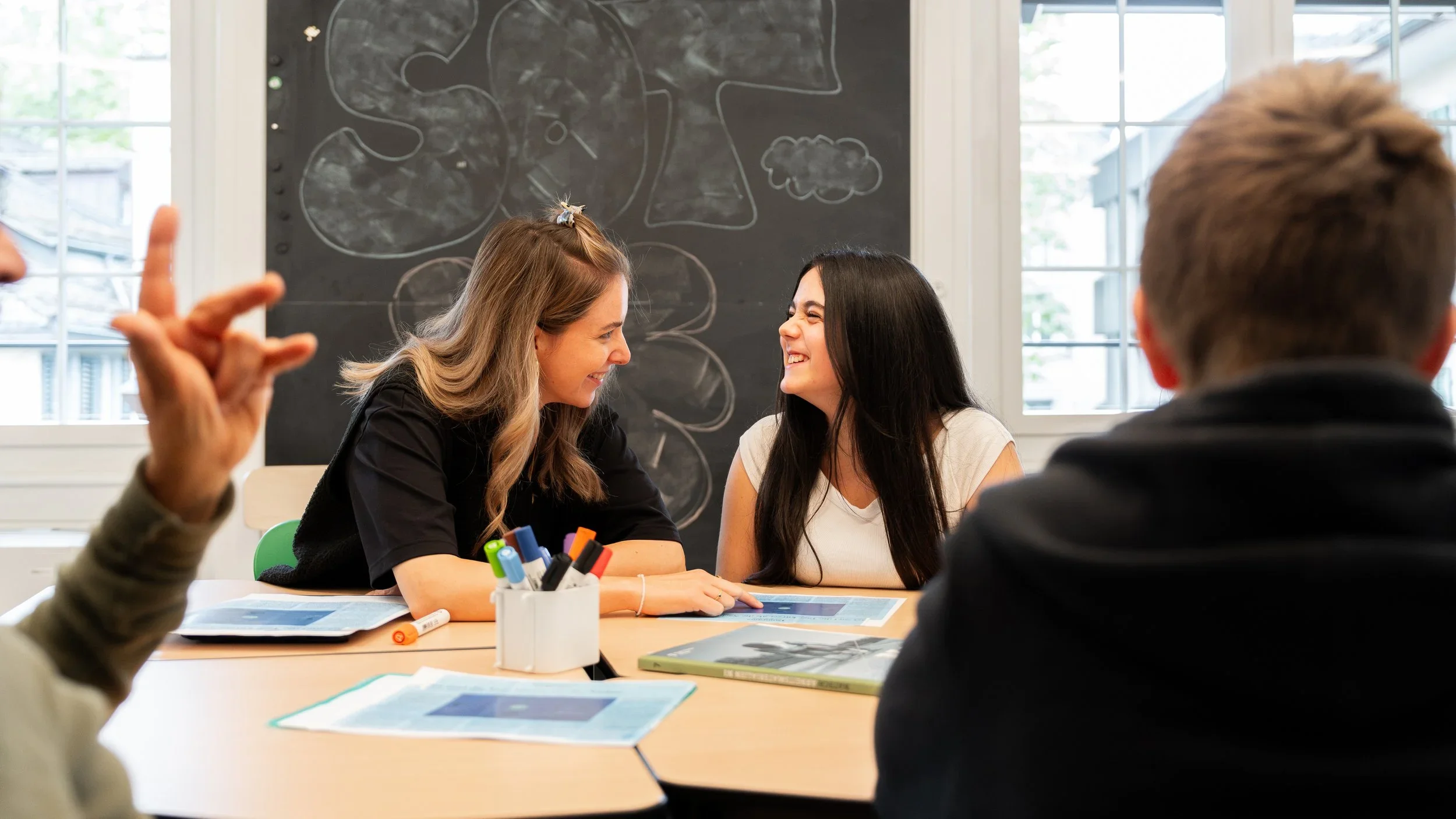
The School of Tomorrow (SOT) Secondary and Gymnasium programs combine German-English bilingual education with the benefits of small classes and personalized attention. Students learn primarily through real-world projects, supported by individual coaching that helps them translate academic knowledge into practical competencies such as problem-solving, collaboration, self-management, and effective study habits.
From our centrally located campus in Zurich, we prepare students for both Swiss and international educational pathways. After completing secondary school, students can seamlessly transition into our International Baccalaureate Diploma Program (IBDP) – available from summer 2028 – or flexibly switch to public Swiss educational pathways, including the Sek A qualification, transfer to Gymnasium basic vocational training (EFZ/EBA with optional BMS).
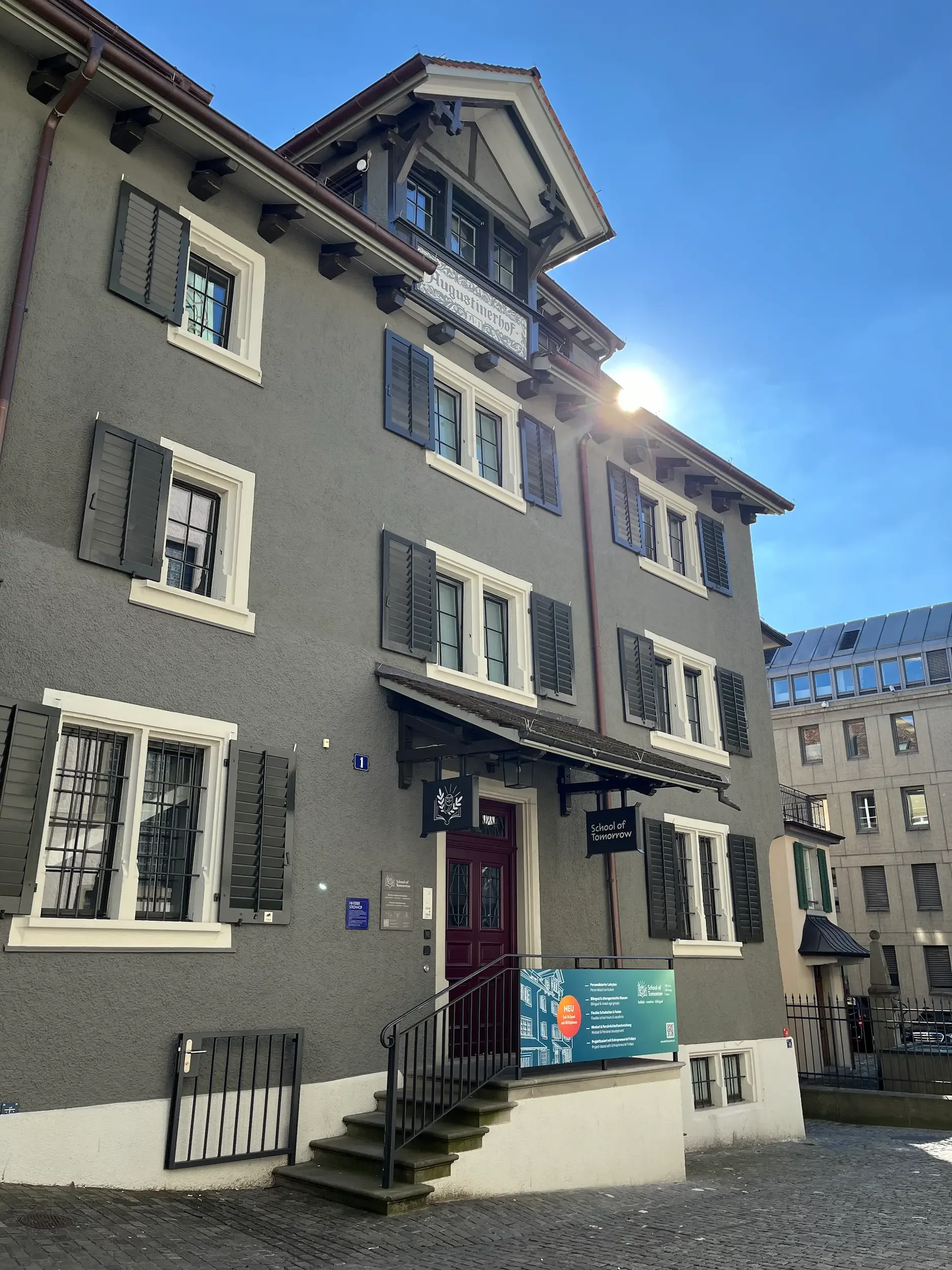
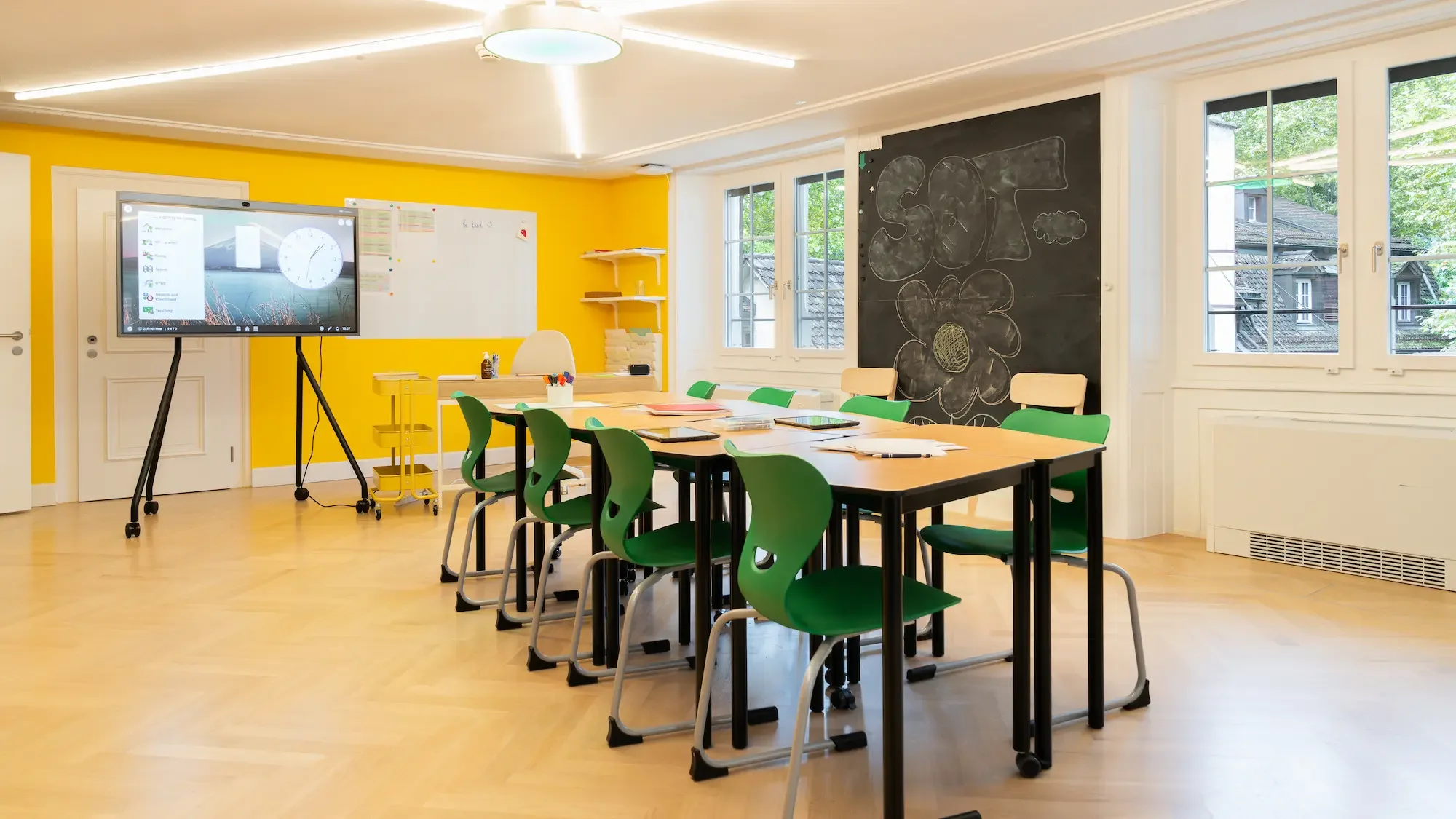
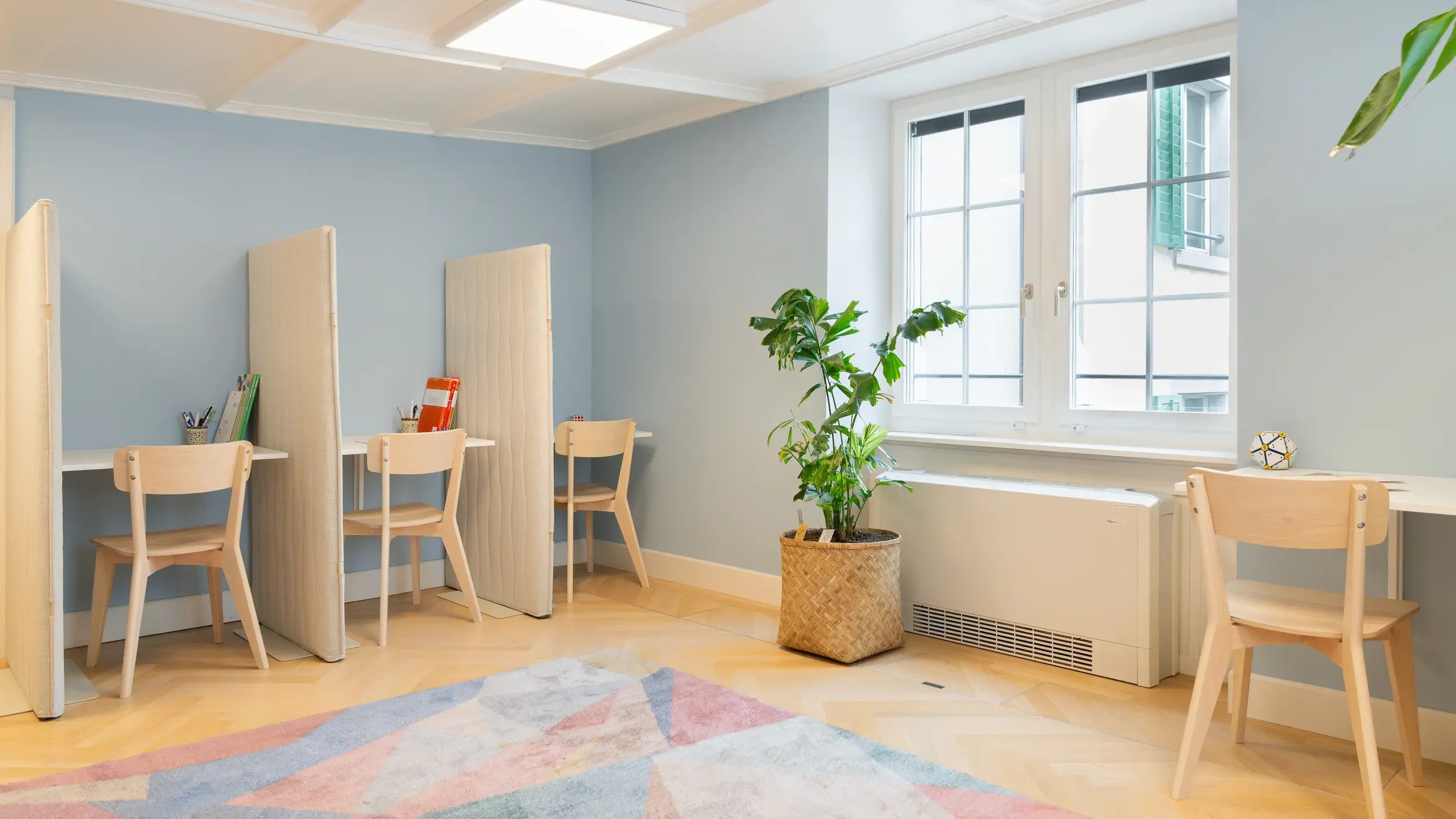
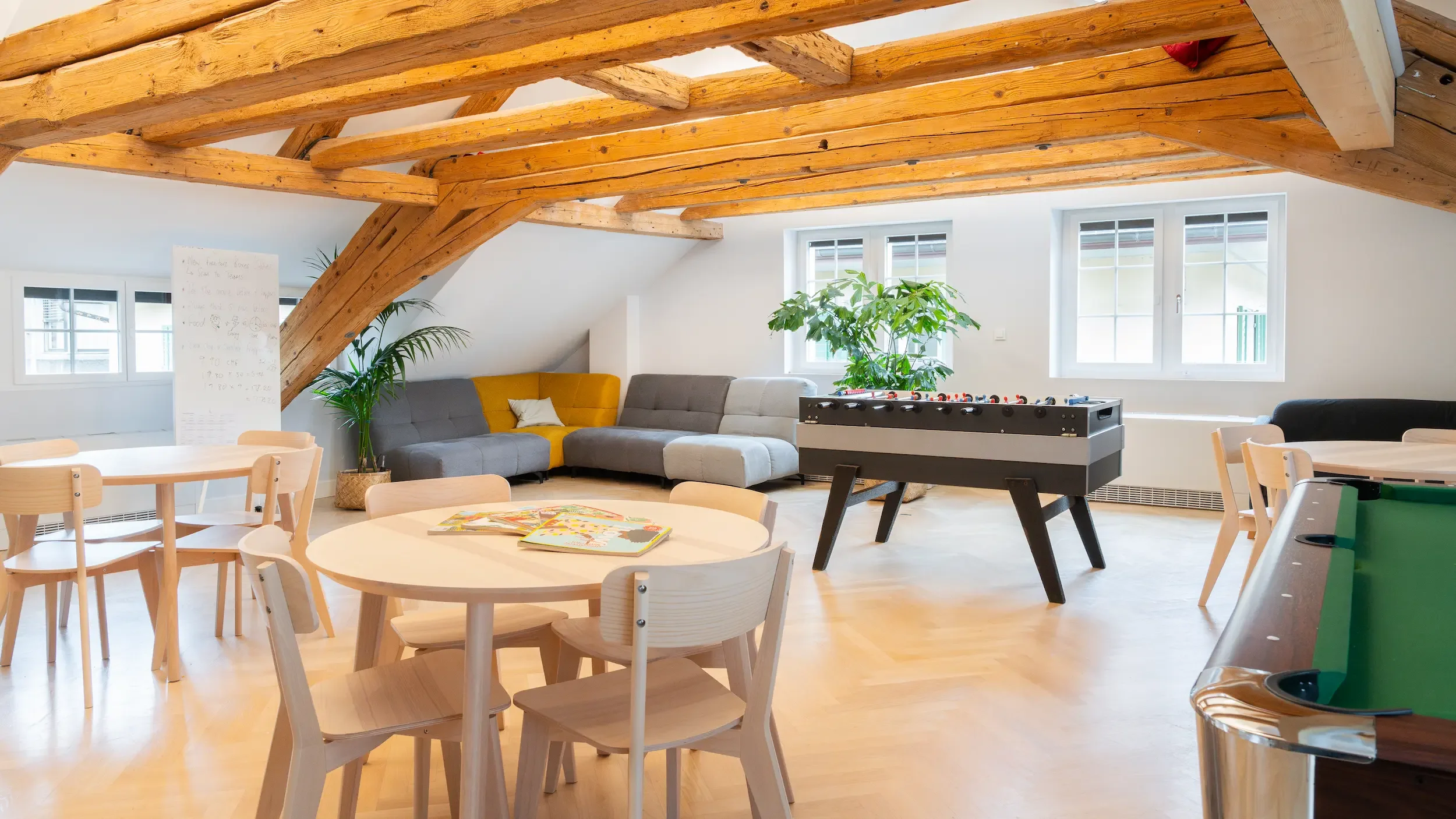
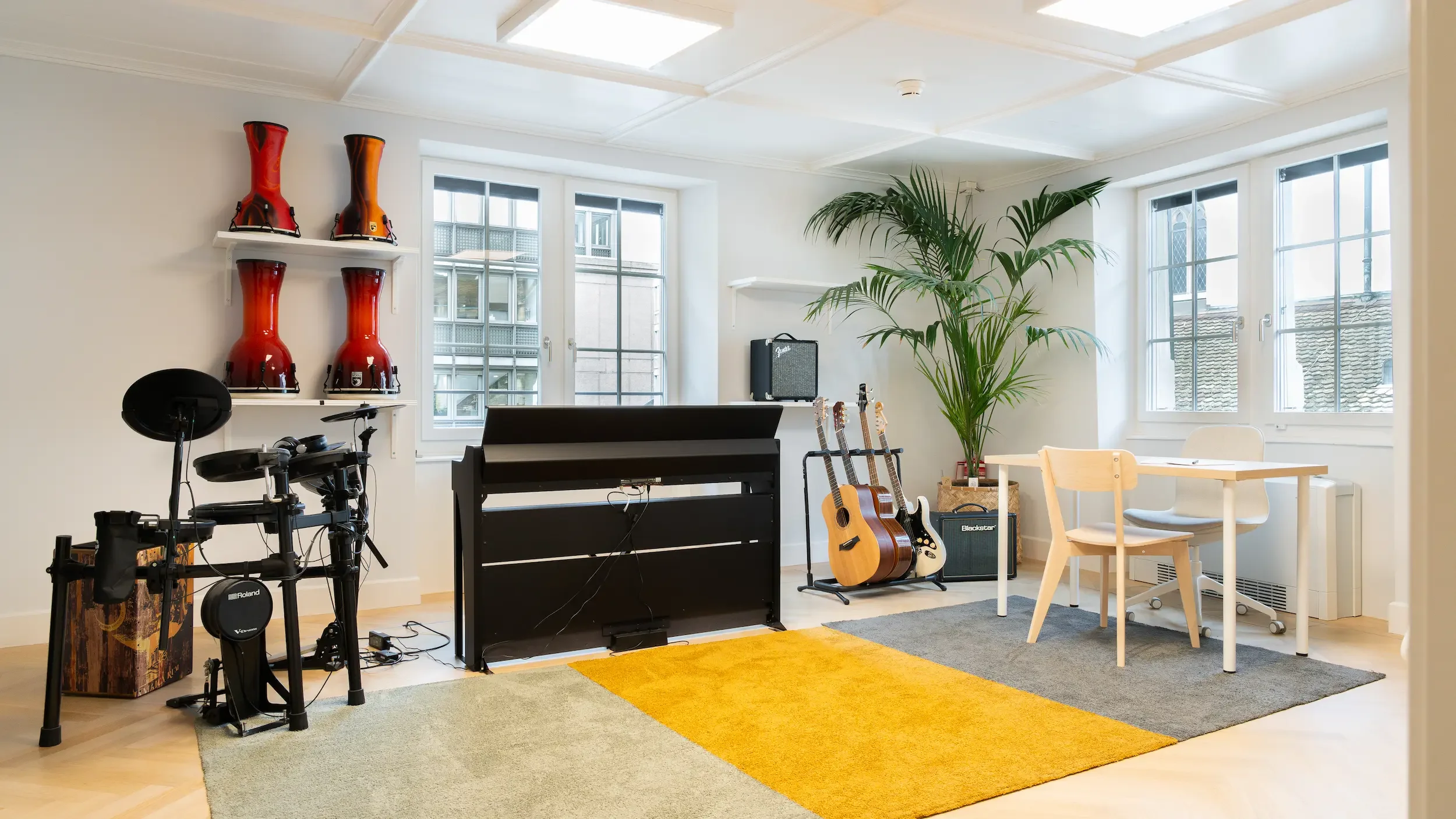
Augustinerhof - ZH City
Book your private tour
Curious about our Augustinerhof campus? Book your private tour now and experience our campus up close. Learn more about our unique learning environments and ask all your questions.
Secondary school
The SOT Secondary and Gymnasium programs combine German-English bilingual education with the advantages of small classes and personalized attention. Students learn predominantly through real-world projects, complemented by clear instruction and individual coaching. In this way, academic knowledge is continuously connected to practical competencies such as problem solving, collaboration, self-management, and effective study habits.
From our centrally located campus in Zurich, we prepare students for both Swiss and international educational paths. We currently have students in secondary level A (Sek A), the highest academic track within Swiss lower secondary (typically grades 7–9), as well as students in "Langzeitgymnasium", "Langzeitgymnasium", an extended academic pathway that begins after primary school and leads directly towards the Swiss Matura (university entrance qualification).
Students who remain with us after 9th grade can seamlessly Gymnasium to our Gymnasium and work toward the International Baccalaureate (IB) Diploma (available from summer 2028). If students leave the school during grades 7–9, they are well prepared for the transition to public Swiss educational pathways – whether to Sek A or Gymnasium to basic vocational training (EFZ/EBA, with the option of vocational baccalaureate BMS), which combines practical work experience with recognized school qualifications.
In the canton of Zurich, compulsory schooling lasts eleven years (Kindergarten + Primary + Secondary I). Students typically finish around age 15/16 and then enter Sekundarstufe II: Gymnasium, Fachmittelschule, or an apprenticeship.
Educational pathways after secondary school at SOT
Apprenticeship (EFZ/EBA, with optional BMS)
What it is: The Swiss vocational education and training (VET) system. Learners complete training in a company and attend vocational school at the same time.
EFZ (3–4 years): Federal VET Diploma, preparing for skilled professions (e.g., IT, healthcare, business, skilled trades, design, and many more)
EBA (2 years): Federal VET Certificate, a more practice-oriented entry point that can later lead to the EFZ.
BMS (Berufsmaturität): Optional extra qualification giving access to Universities of Applied Sciences (Fachhochschulen).
Where this leads: Qualified employment or—with BMS—access to higher education.
SOT advantages:
Solid Sek A–level academic preparation in math, German, English, sciences, humanities, the arts
Bilingual career readiness: CVs, applications, and interview practice in German & English
Portfolio-based projects showcasing skills for professions of interest
Sek A Completion
What it is: Completion of compulsory schooling at secondary level A
Where this leads:EFZ/EBA apprenticeships, BMS, technical college, or transfer to Gymnasium.
SOT advantages:
Domain-based placement set by readiness and adjusted regularly
Bilingual language of instruction, supporting German for Swiss educational pathways, English for international options
A structured route for students entering from Sek B to reach Sek A within 1 year
Clear, personalized milestones shared with families
Ongoing coaching on next-step options within the Swiss system
Gymnasium with IB* qualification
Our Gymnasium is a forward-thinking, university-preparatory program culminating in the International Baccalaureate (IB) Diploma Program. Students may join after Secondary school or directly after Primary school through our Langzeitgymnasium track.
From day one, we focus on global readiness. Graduates are prepared for admission to universities worldwide as well as to Swiss public universities, provided their IB subject choices meet the EDK requirements for recognition as equivalent to the Swiss Matura.
Towards the end of Secondary school, students can opt into the IB pathway, combining broad opportunities with growing subject specialization. The combined Sekundarschule & Gymnasium (Sek & Gymi) journey typically takes 5–7 years, depending on each student’s learning pace, interests, and personal needs.
Students with ambitious sporting or artistic goals are explicitly supported, with flexible timetables and the option to extend their program by 1–2 years, so that high-level training and academic excellence can develop side by side.
Why Choose the SOT Gymnasium?
Flexible learning pace by subject area, based on genuine competence and learning maturity
Strategic IB planning to ensure that subject choices meet EDK recognition criteria
Learning coaching to strengthen research skills, longer writing assignments, and exams
Time flexibility for competitive athletes, artists, and highly committed students
Study counseling tailored to Swiss and international university admissions
*IB = International Baccalaureate Diploma Program
**The first IB cohort is expected to start in summer 2028.
What Comes After Gymnasium at SOT?
Our students move on to:
International universities across Europe, North America, and beyond
Swiss public universities, provided their IB Diploma satisfies the EDK requirements for Swiss Matura equivalency
We work closely with families and students to design IB subject combinations that keep these pathways open.
Gymnasium with IB* qualification
Our Gymnasium is a forward-thinking, university-preparatory program culminating in the International Baccalaureate (IB) Diploma Program. Students may join after Secondary school or directly after Primary school through our Langzeitgymnasium track.
From day one, we focus on global readiness. Graduates are prepared for admission to universities worldwide as well as to Swiss public universities, provided their IB subject choices meet the EDK requirements for recognition as equivalent to the Swiss Matura.
Towards the end of Secondary school, students can opt into the IB pathway, combining broad opportunities with growing subject specialization. The combined Sekundarschule & Gymnasium (Sek & Gymi) journey typically takes 5–7 years, depending on each student’s learning pace, interests, and personal needs.
Students with ambitious sporting or artistic goals are explicitly supported, with flexible timetables and the option to extend their program by 1–2 years, so that high-level training and academic excellence can develop side by side.
Why Choose the SOT Gymnasium?
Flexible learning pace by subject area, based on genuine competence and learning maturity
Strategic IB planning to ensure that subject choices meet EDK recognition criteria
Learning coaching to strengthen research skills, longer writing assignments, and exams
Time flexibility for competitive athletes, artists, and highly committed students
Study counseling tailored to Swiss and international university admissions
*IB = International Baccalaureate Diploma Program
**The first cohort of the IB Diploma Program is expected to begin in summer 2027.
What Comes After Gymnasium at SOT?
Our students move on to:
International universities across Europe, North America, and beyond
Swiss public universities, provided their IB Diploma satisfies the EDK requirements for Swiss Matura equivalency
We work closely with families and students to design IB subject combinations that keep these pathways open.
Structure & everyday school life
Bilingual instruction: German & English
Timetable:
Mon–Thu: 9:00 a.m.–4:30 p.m. (arrival from 8:00 a.m.)
Fri: until 1:00 p.m.
Extended support: Teachers are available on site from Monday to Thursday until 6:00 p.m. for coaching, questions, and quiet study.
Entrepreneurial Fridays: A fixed project and coaching day for in-depth study, creativity, and reflection
Block weeks: Special weeks set aside for assessments, interdisciplinary projects, excursions, and class camps.
Holidays:
3 fixed weeks in summer
3 fixed weeks over Christmas/New Year
6 flexible weeks, individually chosen by families
Please note: Our flexible vacation model offers families more freedom and may differ from the vacation calendars of public schools.
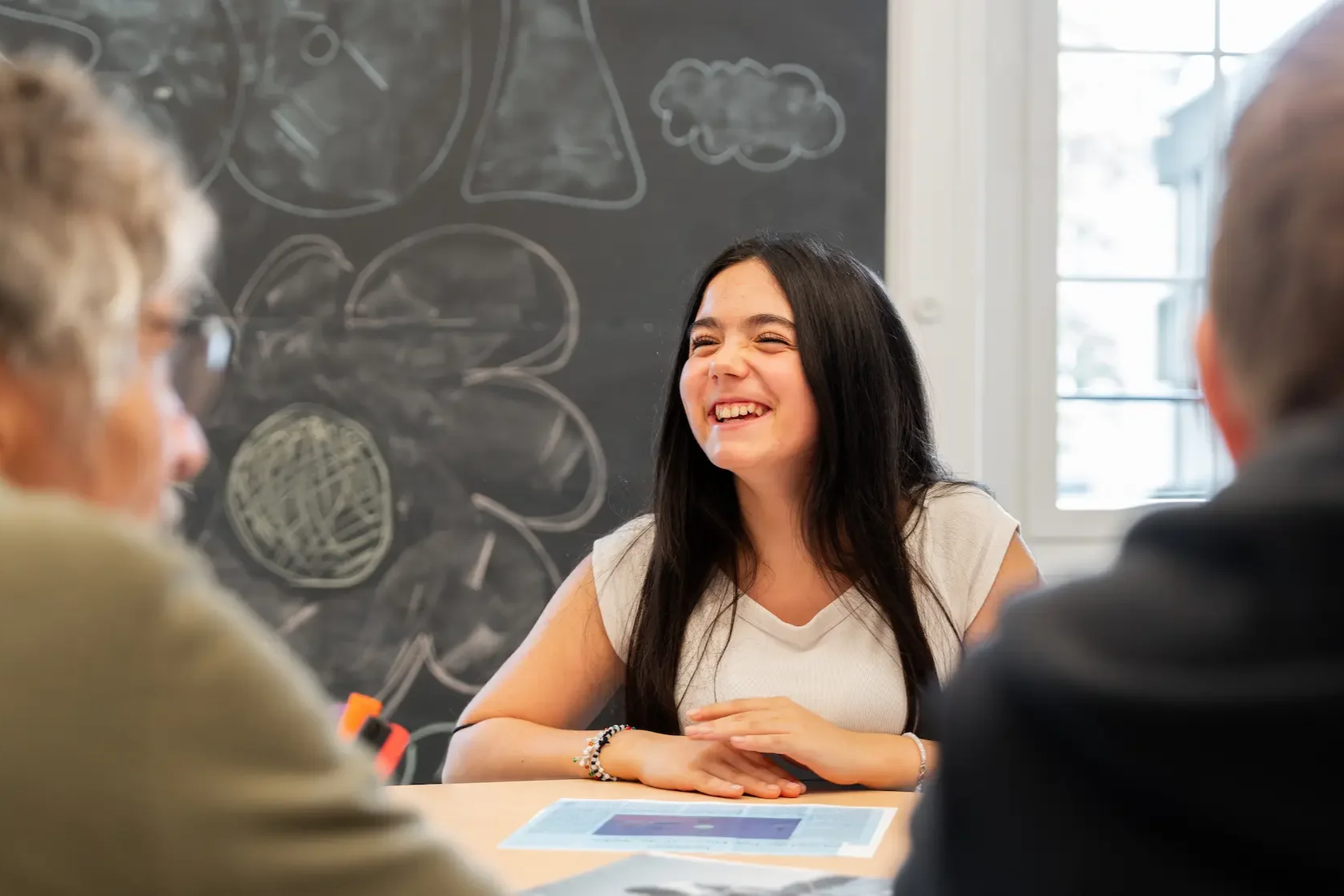
How learning works at SOT
At School of Tomorrow, we believe that students thrive when learning is both supportive and challenging—with the structure they need, and the freedom to explore who they can become. Our approach blends Swiss academic standards with innovative, future-focused learning.
-
We follow the Swiss Lehrplan 21 to ensure strong academic foundations while building the skills, mindset, and global readiness that prepare students for the International Baccalaureate (IB) and other future pathways.
-
Strong foundations in core subjects, with room for specialization depending on individual interests
A focus on the 12 SOT Core Competencies, the skills that matter most for life beyond school
A balance of academic expertise and transferable life skills, keeping Swiss and international options open
-
Every student follows a personalized learning pathway, but always within a supportive community. Students set goals, practice essential skills, and work independently, but they are never working alone. Teachers and peers offer continuous feedback, guidance, and collaboration.
-
Instead of short, fragmented lessons, we work with extended learning blocks. This enables:
deeper concentration
fewer transitions
more than one teacher in the room
This allows learners to benefit from different perspectives, targeted support, and richer learning experiences.
-
Alongside strong foundations in math, languages, humanities, and sciences, students regularly engage in real, challenging, interdisciplinary projects. Projects bring learning to life by connecting academic content with:
creativity
problem-solving ability
collaboration
real-life relevance
This is where students explore, design, research, build, and present-developing confidence and agency.
-
At SOT, learning is fluid and responsive—not limited by fixed tracks.
Readiness is defined per learning domain (e.g., languages, quantitative reasoning, sciences, humanities, arts).
Students move through competency bands, meaning they may work at Gymnasium level in one area and Sek A in another.
Everyone shares the same timetable; teachers differentiate within projects and domains using individual goals, feedback, and clear next steps.
This ensures every student progresses at the right pace-their pace.
-
Bilingualism is woven into daily school life, not taught as a separate add-on.
This is how bilingual teaching works at SOT:
Morning circles alternate between German and English, grounding both languages in everyday communication.
Integrated lessons mix English and German across core subjects, helping students develop academic vocabulary in both languages.
In the first two secondary years, students build a balanced foundations in both languages, key for success in Swiss and international pathways.
As students advance, we guide them towards the pathway that fits their goals:
Swiss Matura (focus on German, with strong English), or
International Baccalaureate (IB) (focus on English with German maintained as a core subject).
This bilingual framework keeps every door open-Swiss and international-while ensuring students develop the language proficiency they need.
-
Learning at SOT is hands-on and varied. Students explore ideas through:
digital tools
experiments
field research
art
cooperative problem solving
Every day balances structured input with choice, exploration, and creativity.
-
We welcome students with demanding athletic or artistic schedules.
If necessary, we can:Timetables and assessments can be adapted.
The full program can be extended by 1-2 years without losing continuity.
This allows young athletes and artists to pursue excellence in both their education and their passion.
-
Students' progress based on evidence of learning, not age alone. Families receive clear, regular updates showing what has been mastered and what comes next.
Timetable example
| Monday | Tuesday | Wednesday | Thursday | Friday | |
|---|---|---|---|---|---|
| 8:00–8:45 a.m. | Flexible arrival | Flexible arrival | Flexible arrival | Flexible arrival | Flexible arrival |
| 8:45–9:15 a.m. | Preparation & kick-off | Preparation & kick-off | Preparation & kick-off | Preparation & kick-off | Preparation & kick-off |
| 9:15–11:00 a.m. | Main subjects: Input / Focus groups / Guided practice | Main subjects: Input / Focus groups / Guided practice | Main subjects: Input / Focus groups / Guided practice | Main subjects: Input / Focus groups / Guided practice | Entrepreneurial projects |
| 11:00 a.m. to 12:45 p.m. | Main subjects: Input / Focus groups / Guided practice | Main subjects: Input / Focus groups / Guided practice | Main subjects: Input / Focus groups / Guided practice | Main subjects: Input / Focus groups / Guided practice | Entrepreneurial projects |
| 12:45 p.m. to 1:45 p.m. | lunch break | lunch break | lunch break | lunch break | lunch break |
| 1:45 p.m. to 2:30 p.m. | project work | Natural sciences Input / Focus groups | The world of music in theory and practice | class council | Complete weekly goals / Optional self-study |
| 2:40–3:25 p.m. | French: Input, focus groups / guided practice / self-study | Body Competence | art | Workshop 1 | Complete weekly goals / Optional self-study |
| 3:35–4:20 p.m. | French: Input, focus groups / guided practice / self-study | Body Competence | art | Workshop 2 | Complete weekly goals / Optional self-study |
| 4:20 p.m. to 4:30 p.m. | Reflection | Reflection | Reflection | Reflection | |
| 4:30 p.m. to 6:00 p.m. | Optional self-study | 4:45–5:45 p.m. SOT singing, musical, dance (optional) | Optional self-study | 4:45–5:45 p.m. SOT singing, musical, dance (optional) |
Note: This timetable is for illustrative purposes only and may vary depending on the children's needs and the respective learning phase.
Assessment & Learning Outcomes
A balanced mix of learning activities, projects, presentations, and performance assessments enables fair grading and an appropriate learning pace.
Projects also serve as evidence for apprenticeship applications or for IB preparation.
Degrees & Prospects
At SOT, students can achieve:
Secondary school diploma A → for EFZ/EBA apprenticeships, BMS, Fachmittelschule, or transfer to Gymnasium
International Baccalaureate (IB) → internationally recognized for university admission (compliant with EDK standards for Swiss universities)
Transfers: Students can also move into Swiss Federal Gymnasium or other schools, subject to cantonal entry rules (usually an entrance exam).
Admission & Requirements
We focus on motivation and potential, not on a single high-stakes exam. We are convinced that a single exam on a specific date is not a good basis for such and important and long-term decision.
Steps:
Short video and personal letter
Recent school reports
Admission conversation with the student and parents
Students joining with a Sek-B recommendation receive a clear development plan to reach Sek A, with milestones and regular review.
As we are a bilingual school, we recommend that all students who want to join have a level of at least B1 in the weaker language (German or English).
School fees
Our school fees are transparent and cover almost all services. The monthly fees include:
Teaching, mentoring, materials, and project work
Supervision Mon–Thu 8:00 a.m.–6:00 p.m., Fri 8:00 a.m.–1:00 p.m.
Only 6 fixed closure weeks (3 in summer, 3 at Christmas)
6 additional flexible family holiday weeks
Day trips, family events, and community activities
Admissions are rolling; students can start school at any time. Fees are calculated on a pro rata basis.
Our locations
School of Tomorrow offers different school grades at three locations.
Our school offers a first-class education at three locations for kindergarten, primary, secondary and gymnasium. As not all school grades are available at every location, you will find an overview here to help you choose the best possible place of learning for your child.
Sihlberg Castle (ZH Enge)
Kindergarten & Primary
Uster
Kindergarten & Primary
Augustinerhof (ZH City)
Secondary & Gymnasium